 then 'Add to home screen'
 then 'Add to home screen'


Pure lead
Lead is one of the first elements known to man, and examples of lead artifacts have been identified in archaeological excavations in Egypt as early as 3500 BC. Lead has been known and considered in Iran since the late third millennium BC. The primary uses of lead were: building structures, pigments used in ceramic glazes, water pipes, and decorative items.
Primary lead is produced from concentrate and secondary lead is produced during the recycling process, and the recycling industry has made significant progress and development in recent years.
Lead is the most widely used metal after iron, aluminum, copper, and zinc. The main uses of lead include: the production of lead-acid batteries, cable coatings, military industries, ceramics, crystal glasses, radiation protection alloys, and it is also used in the form of tetraethyl and tetramethyl lead for gasoline combustion.
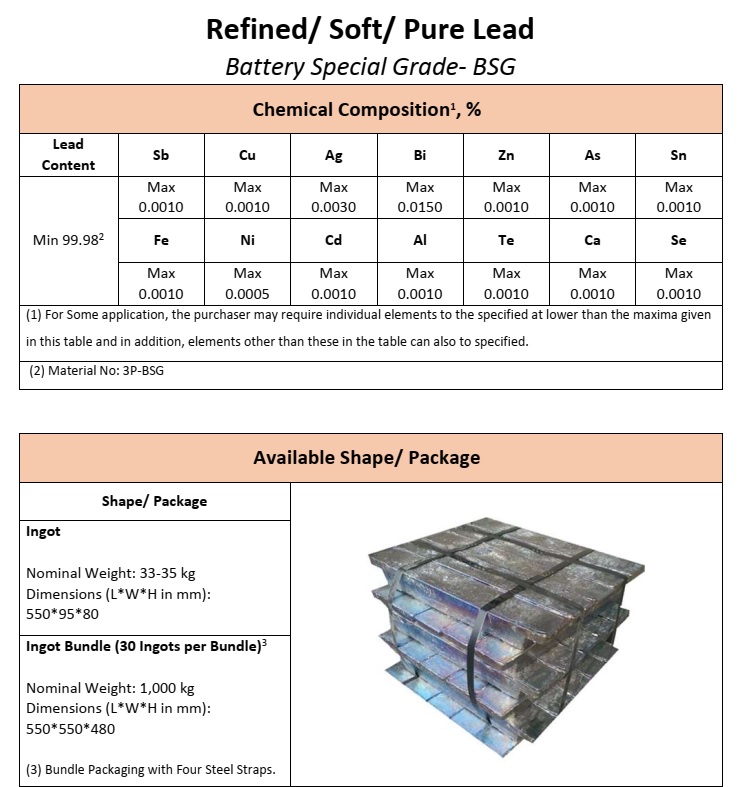
The London Metal Exchange (LME) basis for soft/pure lead is a purity of at least 99.97% according to the BS-EN-12659 standard. According to the aforementioned standard, pure lead is categorized into four groups: 99.94%, 99.97%, 99.985%, and 99.99%, and the Kashan Kane Ara Mining Company produces various types of pure lead ingots according to customer requests.